About Work AI Services Pricing Taste Let's Talk
FigmaHTMLCSSAI Integration

Evolving Bing Maps Enterprise into the Azure Maps Platform

Client
Microsoft
Year
2024
Discipline
Figma · HTML · CSS · AI Integration
View Live
Evolving Bing Maps Enterprise into the Azure Maps Platform
Overview
Carrying the Bing Maps for Enterprise experience forward into Azure's developer ecosystem — a multi-year platform migration that brought consistent identity, documentation, and AI-assisted demos to a product serving millions of developers.
Role
Lead Designer
Discipline
Platform UX, Brand, Front-end
Tools
Figma, HTML/CSS, Azure Design System
Client
Microsoft
Migration

Bringing a legacy platform into the Azure family.

Bing Maps for Enterprise had a decade of accumulated content, demos, and developer surface area. Moving it into Azure meant preserving every entry point for paying customers while adopting Azure's IA, design system, and motion language end-to-end.
AI demos

Interactive examples developers can actually run.

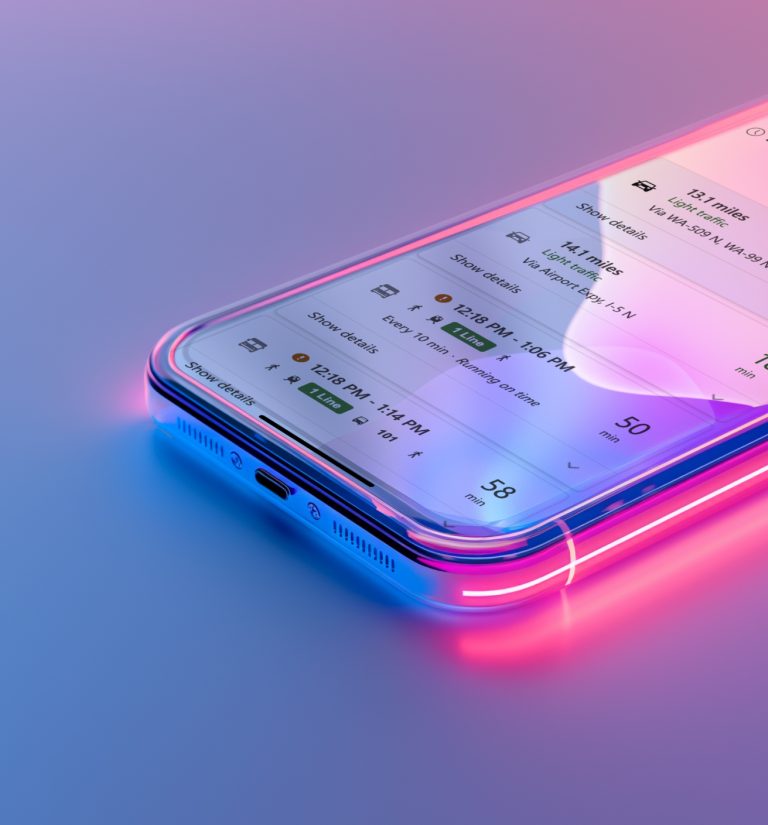
Each capability — isochrones, truck routing, multi-itinerary optimization, mixed reality — got an in-browser demo with copy-paste code. AI-assisted prompts let developers ask, "show me a 15-min drive-time polygon around Seattle" and see the result live.
The migration problem

Move a decade of platform without breaking a single paying customer.

Bing Maps for Enterprise had 15+ years of accumulated SKUs, SDKs, sample code, and support contracts. Every URL was potentially load-bearing for someone's production system — fleet dispatchers, logistics platforms, government GIS tooling. The mandate: adopt Azure's identity, IA, and design language end-to-end while preserving every entry point, every code sample, and every billing relationship.
Approach

Docs-as-product, not docs-as-afterthought.

We treated the developer surface as a product in its own right: capability pages that read like case studies, in-browser sandboxes for every SDK method, and copy-paste snippets that stay in sync with the live API via a generated pipeline. AI-assisted prompts let devs describe intent in natural language ("15-minute drive-time polygon around Seattle") and get runnable code back. Every legacy route now redirects semantically — zero broken deep links at cutover.
Developer surface unified
100%
Every Bing Maps for Enterprise capability rebadged, redocumented, and re-demoed inside the Azure design system — with zero regressions reported by enterprise customers at cutover.
Outcomes

A platform that finally reads as one product.

Azure Maps now stands next to Cognitive Services, App Service, and the rest of the Azure PaaS family as a first-class developer surface. Time-to-first-successful-request dropped meaningfully in Microsoft's internal telemetry, sales enablement teams stopped having to translate between two brands, and the docs pattern we built for map demos was adopted by adjacent Azure teams as reference material.
← Previous Project
Designing adaptive AI email for Microsoft Viva
Next Project →
Unifying distributed tracing across microservices

Ready for lift off?

Now accepting RFPs for FY25/26. Our customer success team is standing by to put together the right team for your digital advertising and product design needs.